Sheep Dairy: Creating New Opportunities for New Zealand Farmers
New Zealand’s sheep dairy industry is creating new opportunities for farmers to diversify their businesses, make better use of their land and build a future in farming.
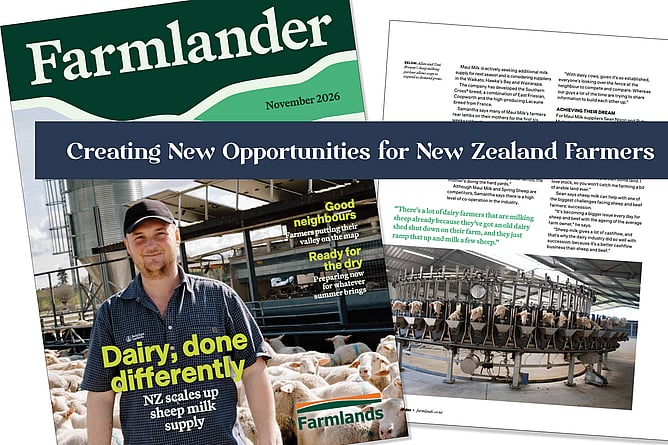
A recent Farmlander magazine article, “Sheep Milk Comes of Age,” explores the industry's development and rising demand for sheep milk products in New Zealand. It features the two processors in Waikato and the central North Island, Us Maui Milk (founded in 2014) and Spring Sheep (founded in 2015), as well as farmers’ experiences adding sheep milking to their operations. Here are some key takeaways from the Maui Milk suppliers featured in the article.
Sheep dairy as part of the bigger picture:
Sheep milking doesn't have to mean changing an entire farming operation. For many farmers, it is another income stream that works alongside existing sheep and beef or dairy farming.
Maui Milk, Milk Supply Manager Samantha Fogden says: “That is definitely something we are seeing a lot more. It's not a sole conversion straight to sheep dairy; it's becoming just another part of a farm business, and they're getting a combination of income from the meat and the milk.”
Helping farmers achieve their goals:
From Maui Milk suppliers Sean Nixon and Ruby Mulinder, sheep milking helped them achieve their goal of owning a farm. Ruby explains: “We were never going to be able to afford a 250-300ha sheep and beef property, so being able to buy a smaller block and turn that into a sustainable system that can generate a fair bit of revenue was key.” Their experience highlights how sheep dairy can create opportunities for farmers who want to own land and build a viable farming business.
Diversifying income:
Allan and Toni Browne, Maui Milk suppliers near Cambridge, have incorporated sheep milking into their wider dairy, sheep and beef operation. For Allan, having different sources of income is an important part of their farming system. “A couple of wool cheques and a couple of loads of fat lambs and fat cattle and that was your whole income for the year. Now we see income every month.” Their experience shows how sheep milk production can complement existing farming activities while providing another source of regular income.
Finding practical ways to farm:
For many Maui Milk suppliers, keeping lambs with their mothers for the first six weeks is an important part of their farming system. This can reduce the labour and infrastructure needed for artificial rearing while supporting good mothering traits in the flock. Samantha says: “You want a ewe that's going to be a good mother, produce a good sturdy set of twins that they can rear on so that you're not investing a whole lot by artificially rearing these lambs; the mother's doing the hard yards.” It highlights the importance of breeding, animal management and finding practical systems that work for each farm.
An industry with room to grow:
New Zealand's sheep dairy industry is still developing, with growing demand for sheep milk products creating opportunities to increase local milk supply. The Farmlander feature also highlights the value of farmers sharing knowledge and learning from one another as the industry grows. At Maui Milk, we are looking to work with more New Zealand farmers to help meet demand for sheep milk. We are particularly interested in talking with farmers in the Waikato, Hawke’s Bay and Wairarapa who want to explore whether sheep milking could fit into their existing farming operation.
Interested in sheep dairy?
Sheep dairy won't be the right fit for every farm, but it may offer another way to diversify income, make use of available land and plan for the future. If you are interested in learning more about supplying sheep milk to Maui Milk, get in touch with our team to discuss the opportunities for your farm.
Read the full article In farmlander Magazine